AI and Robotics Training for Teachers in Ghana: The Complete School Guide
Training should leave teachers able to plan, facilitate, troubleshoot, assess and protect learners—not simply impressed by a demonstration.
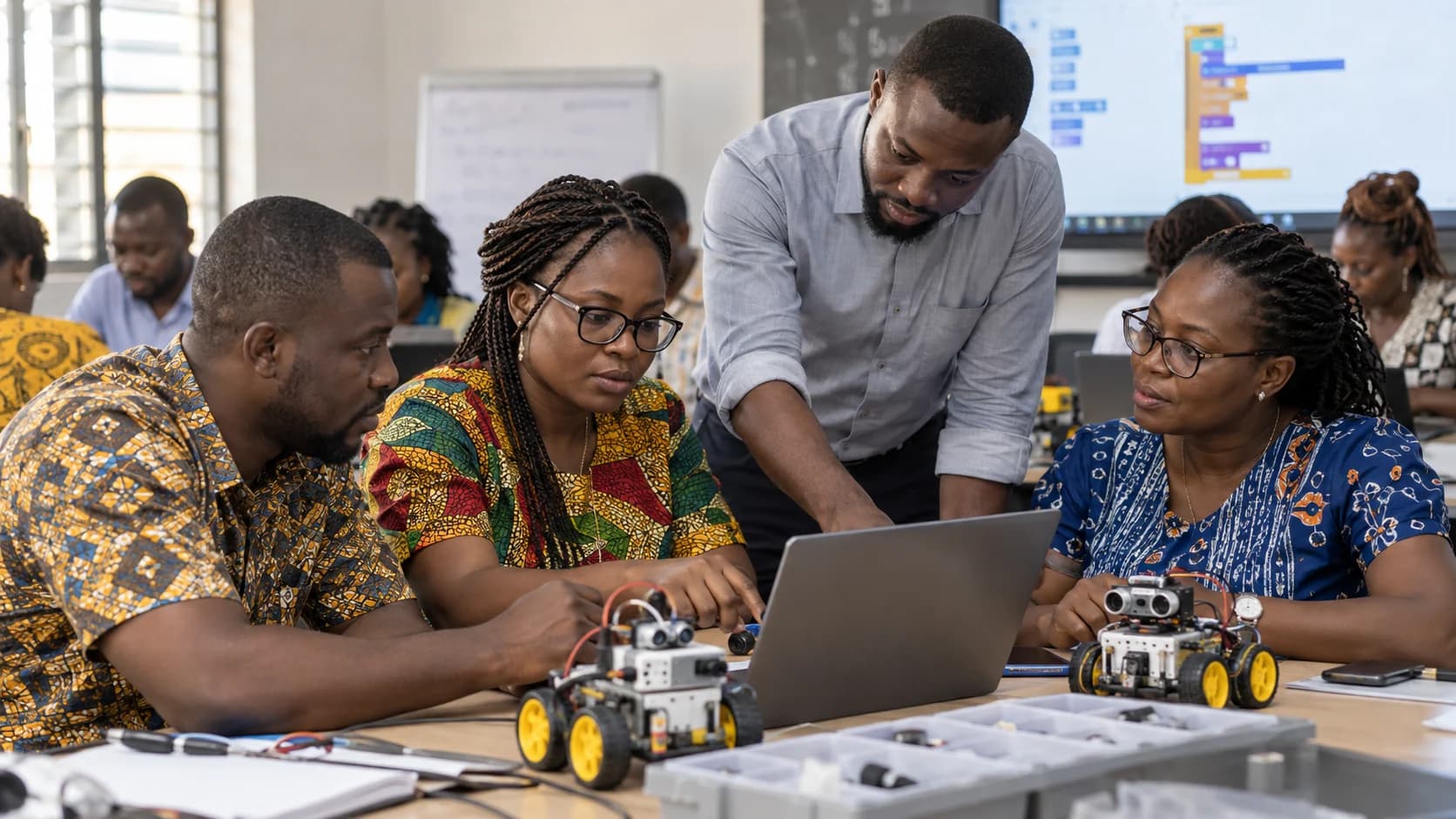
The central idea
Use this guide to design or commission teacher development that changes classroom practice.
Editorial evidence note
This is a decision guide, not an independent ranking or fixed quotation. Costs, schedules and programme availability must be confirmed through a written assessment.
How a Ghanaian institution could apply this guide
Imagine a leadership team using the five decision areas in this article before committing funds. Instead of beginning with a preferred product, the team defines learner outcomes, checks readiness, requests comparable evidence and pilots the highest-risk assumption. That process creates a defensible decision and gives InovTech—or any provider—a clearer standard to meet.
Why this decision matters
For school leaders, districts and professional-development coordinators, the decision affects educational quality, finances and trust. Short technology workshops can increase awareness without producing the confidence or support teachers need for independent delivery.
Use this guide to design or commission teacher development that changes classroom practice. The aim is not to rush the reader toward a purchase; it is to make the requirements for a strong decision unmistakably clear.
Start from classroom responsibilities
Training outcomes should specify what teachers must do before, during and after a lesson: prepare equipment, frame challenges, guide debugging, assess evidence and close systems safely.
The practical question is whether this principle is visible in plans, budgets, learning materials and day-to-day responsibilities. Institutions should ask for evidence, test assumptions on a manageable scale and document who owns the next action.
Combine technical and pedagogical learning
Teachers need robotics and AI concepts alongside questioning, group roles, inclusion, project design and assessment. Technical fluency without facilitation can still produce weak learning.
The practical question is whether this principle is visible in plans, budgets, learning materials and day-to-day responsibilities. Institutions should ask for evidence, test assumptions on a manageable scale and document who owns the next action.
Practise with realistic constraints
Rehearsal should reflect class size, device sharing, connectivity and the actual curriculum. Ideal demonstrations cannot prepare teachers for crowded or low-connectivity contexts.
The practical question is whether this principle is visible in plans, budgets, learning materials and day-to-day responsibilities. Institutions should ask for evidence, test assumptions on a manageable scale and document who owns the next action.
Build responsible AI practice
Teachers must understand verification, privacy, bias, disclosure and when AI use undermines genuine assessment. Policies become usable through scenarios, not documents alone.
The practical question is whether this principle is visible in plans, budgets, learning materials and day-to-day responsibilities. Institutions should ask for evidence, test assumptions on a manageable scale and document who owns the next action.
Continue after the workshop
Coaching, peer communities, lesson observation and troubleshooting clinics convert initial confidence into dependable practice.
The practical question is whether this principle is visible in plans, budgets, learning materials and day-to-day responsibilities. Institutions should ask for evidence, test assumptions on a manageable scale and document who owns the next action.
Your practical next step
Book an InovTech teacher-capability assessment for your school or network. A useful first conversation should clarify learners, objectives, location, timetable, current capacity, constraints and the evidence required for a decision.
InovTech can then recommend an appropriate pathway rather than forcing every institution into the same package.
- Pre-training needs assessment
- Hands-on rehearsal
- Classroom-ready lesson plans
- Safeguarding and AI guidance
- Post-training coaching
Frequently asked questions
Can non-ICT teachers learn robotics?
Yes. Robotics can support mathematics, science, design and interdisciplinary learning when training begins from relevant classroom problems.
How long should teacher training last?
Duration depends on expected independence. Awareness can begin quickly, but sustained classroom capability requires practice, application and follow-up.
Put the article into practice
- 1Pre-training needs assessment
- 2Hands-on rehearsal
- 3Classroom-ready lesson plans
- 4Safeguarding and AI guidance
- 5Post-training coaching