Corporate STEM Sponsorship in Ghana: Costs, Models and Measurable Outcomes
A powerful sponsorship does not end with donated equipment. It creates repeated learning, teacher capability, credible evidence and a responsible path to continuation.
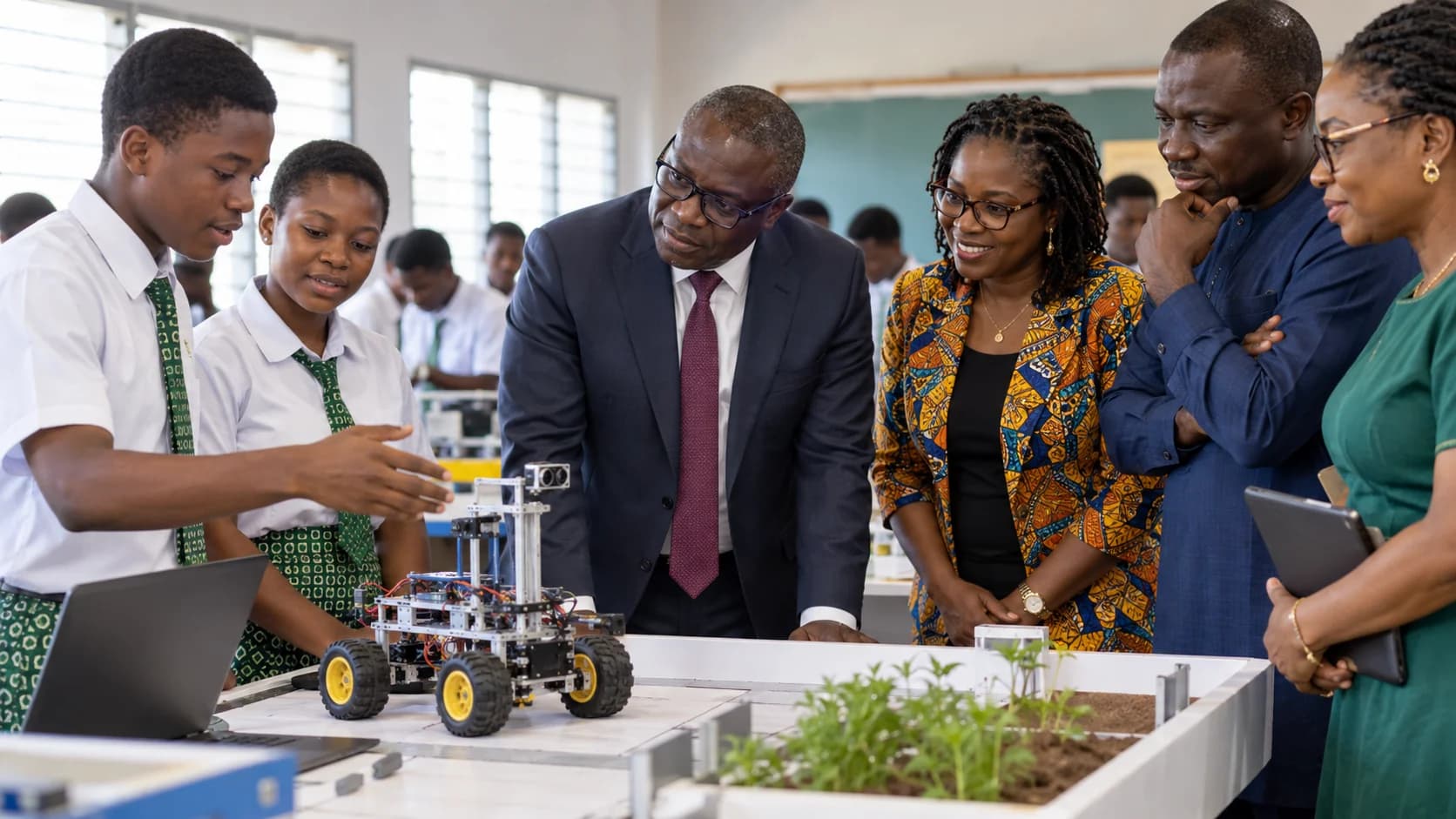
The central idea
This guide helps sponsors choose an intervention model, structure a budget and demand evidence without burdening schools.
Editorial evidence note
This is a decision guide, not an independent ranking or fixed quotation. Costs, schedules and programme availability must be confirmed through a written assessment.
How a Ghanaian institution could apply this guide
Imagine a leadership team using the five decision areas in this article before committing funds. Instead of beginning with a preferred product, the team defines learner outcomes, checks readiness, requests comparable evidence and pilots the highest-risk assumption. That process creates a defensible decision and gives InovTech—or any provider—a clearer standard to meet.
Why this decision matters
For CSR, ESG, foundations and corporate-affairs teams, the decision affects educational quality, finances and trust. Visibility pressures can produce impressive launches while underfunding facilitation, maintenance, safeguarding and follow-up.
This guide helps sponsors choose an intervention model, structure a budget and demand evidence without burdening schools. The aim is not to rush the reader toward a purchase; it is to make the requirements for a strong decision unmistakably clear.
Choose the sponsorship model
Options include student cohorts, teacher development, school laboratory setup, mobile outreach, girls-in-STEM programming, virtual access and multi-school implementation.
The practical question is whether this principle is visible in plans, budgets, learning materials and day-to-day responsibilities. Institutions should ask for evidence, test assumptions on a manageable scale and document who owns the next action.
Build the complete budget
Budget for discovery, delivery staff, training, equipment, transport, connectivity, safeguarding, communications, evaluation, maintenance and programme management.
The practical question is whether this principle is visible in plans, budgets, learning materials and day-to-day responsibilities. Institutions should ask for evidence, test assumptions on a manageable scale and document who owns the next action.
Select schools responsibly
Use transparent criteria based on need, readiness, inclusion, leadership commitment and the ability to protect and sustain the intervention.
The practical question is whether this principle is visible in plans, budgets, learning materials and day-to-day responsibilities. Institutions should ask for evidence, test assumptions on a manageable scale and document who owns the next action.
Measure outcomes that matter
Combine participation with learner artefacts, performance tasks, teacher practice, access equity, utilisation and evidence of continuation.
The practical question is whether this principle is visible in plans, budgets, learning materials and day-to-day responsibilities. Institutions should ask for evidence, test assumptions on a manageable scale and document who owns the next action.
Communicate without exploiting learners
Secure consent, protect dignity, avoid inflated claims and let educational value lead public storytelling.
The practical question is whether this principle is visible in plans, budgets, learning materials and day-to-day responsibilities. Institutions should ask for evidence, test assumptions on a manageable scale and document who owns the next action.
Your practical next step
Ask InovTech to develop a corporate STEM sponsorship concept and costed proposal. A useful first conversation should clarify learners, objectives, location, timetable, current capacity, constraints and the evidence required for a decision.
InovTech can then recommend an appropriate pathway rather than forcing every institution into the same package.
- Clear theory of change
- Full-cost budget
- Transparent selection
- Safeguarding and consent
- Continuation plan
Frequently asked questions
What can a company sponsor?
A company can support student programmes, teacher training, labs, mobile outreach, girls-in-STEM initiatives, equipment or virtual-learning access.
How is sponsorship cost calculated?
Cost depends on learner reach, locations, duration, staffing, equipment, training, logistics, evaluation and continuation requirements.
Put the article into practice
- 1Clear theory of change
- 2Full-cost budget
- 3Transparent selection
- 4Safeguarding and consent
- 5Continuation plan