KodeVR for Schools: How to Teach Robotics Without Buying a Physical Robot for Every Child
Virtual robotics can dramatically expand practice time and access—but only when simulation is connected to sound curriculum, teacher guidance and genuine engineering reasoning.
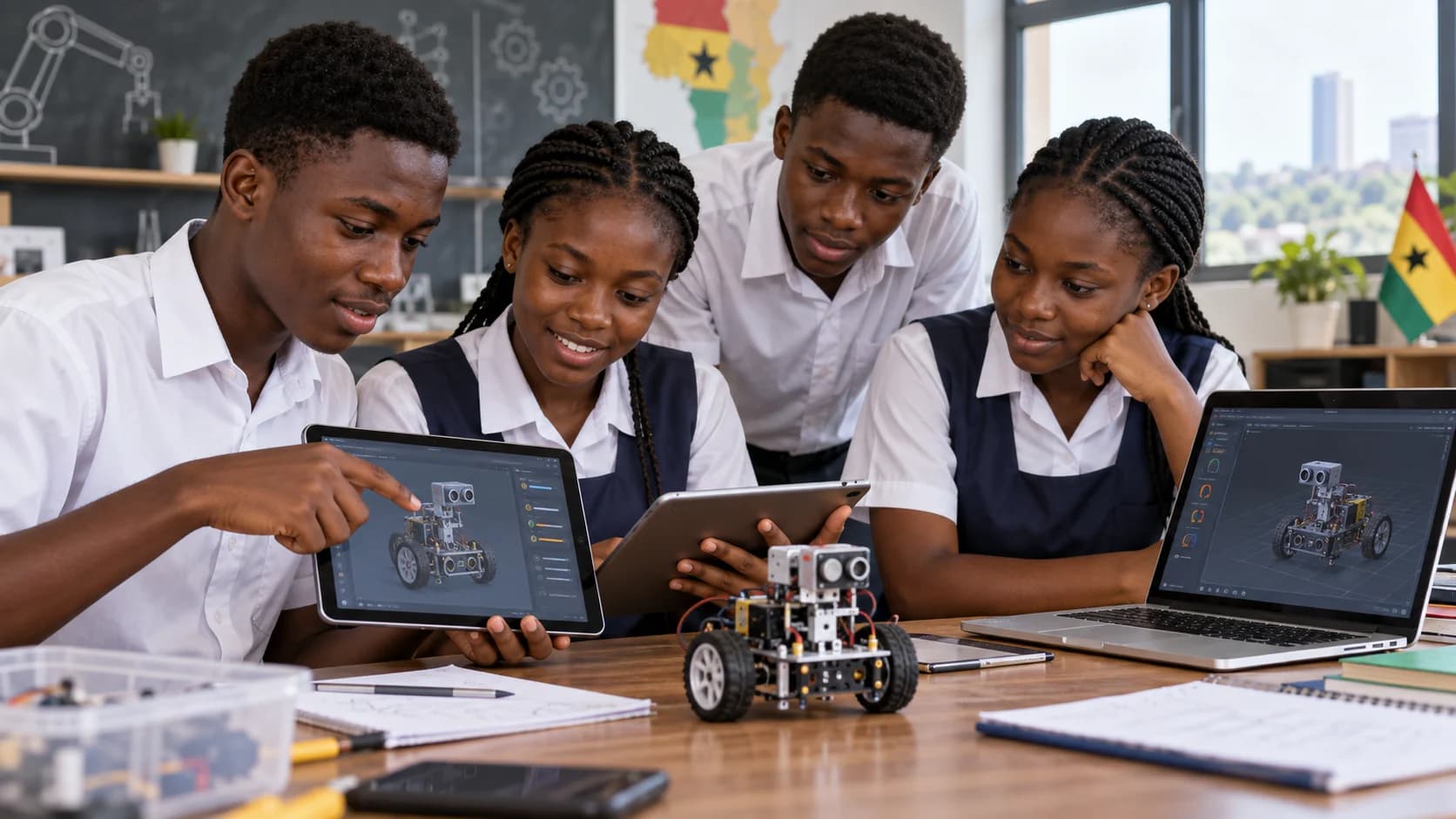
The central idea
This product-led guide explains where virtual robotics is powerful, where physical systems still matter and how a blended programme can work.
Editorial evidence note
External sources are linked below. InovTech-specific facts are limited to what those sources or the organisation’s verified records support.
How a Ghanaian institution could apply this guide
Imagine a leadership team using the five decision areas in this article before committing funds. Instead of beginning with a preferred product, the team defines learner outcomes, checks readiness, requests comparable evidence and pilots the highest-risk assumption. That process creates a defensible decision and gives InovTech—or any provider—a clearer standard to meet.
Why this decision matters
For schools seeking accessible robotics delivery, the decision affects educational quality, finances and trust. Physical kit ratios, repairs and transport can restrict robotics access, while poorly designed digital tools can reduce learning to screen interaction.
This product-led guide explains where virtual robotics is powerful, where physical systems still matter and how a blended programme can work. The aim is not to rush the reader toward a purchase; it is to make the requirements for a strong decision unmistakably clear.
The access problem virtual robotics can solve
A mobile-first environment allows more learners to practise algorithms, sensors, control and debugging without waiting for scarce hardware or risking components during early experimentation.
The practical question is whether this principle is visible in plans, budgets, learning materials and day-to-day responsibilities. Institutions should ask for evidence, test assumptions on a manageable scale and document who owns the next action.
What students should do inside KodeVR
Learners should predict robot behaviour, construct code, test in simulation, interpret feedback, revise and explain. The platform supports learning when these decisions remain visible.
The practical question is whether this principle is visible in plans, budgets, learning materials and day-to-day responsibilities. Institutions should ask for evidence, test assumptions on a manageable scale and document who owns the next action.
Where physical robotics still matters
Materials, friction, loose connections, battery behaviour and mechanical reliability require physical experience. Virtual robotics should expand access, not erase engineering reality.
The practical question is whether this principle is visible in plans, budgets, learning materials and day-to-day responsibilities. Institutions should ask for evidence, test assumptions on a manageable scale and document who owns the next action.
How a school can implement the platform
Schools can begin with a defined cohort, device plan, teacher orientation, baseline task and a short module sequence before expanding across classes.
The practical question is whether this principle is visible in plans, budgets, learning materials and day-to-day responsibilities. Institutions should ask for evidence, test assumptions on a manageable scale and document who owns the next action.
How to evaluate a KodeVR pilot
Examine learner completion, conceptual explanations, debugging independence, teacher confidence, access per learner and transfer between simulated and physical problems.
The practical question is whether this principle is visible in plans, budgets, learning materials and day-to-day responsibilities. Institutions should ask for evidence, test assumptions on a manageable scale and document who owns the next action.
Your practical next step
Request a KodeVR school demonstration and pilot design session. A useful first conversation should clarify learners, objectives, location, timetable, current capacity, constraints and the evidence required for a decision.
InovTech can then recommend an appropriate pathway rather than forcing every institution into the same package.
- Device and offline plan
- Teacher orientation
- Age-appropriate module
- Learner evidence
- Blended progression
Frequently asked questions
Does KodeVR require one robot per learner?
No. It is designed to let learners build and program virtual robots, reducing dependence on individual physical kits.
Can KodeVR replace physical robotics completely?
It can deliver substantial coding and systems learning, but a blended pathway provides valuable physical engineering experience where resources allow.
Put the article into practice
- 1Device and offline plan
- 2Teacher orientation
- 3Age-appropriate module
- 4Learner evidence
- 5Blended progression