Robotics Kits for Schools in Ghana: Prices, Features and What You Actually Need
The most expensive kit is not automatically the best educational investment. Schools need the right complexity, durability, curriculum and support for their learners.
The central idea
This guide explains kit categories, price drivers and a safer procurement process without promoting one platform as universally suitable.
Editorial evidence note
This is a decision guide, not an independent ranking or fixed quotation. Costs, schedules and programme availability must be confirmed through a written assessment.
How a Ghanaian institution could apply this guide
Imagine a leadership team using the five decision areas in this article before committing funds. Instead of beginning with a preferred product, the team defines learner outcomes, checks readiness, requests comparable evidence and pilots the highest-risk assumption. That process creates a defensible decision and gives InovTech—or any provider—a clearer standard to meet.
Why this decision matters
For school procurement teams, teachers and sponsors, the decision affects educational quality, finances and trust. Buyers can overinvest in features learners never use or select low-cost kits that lack curriculum, spare parts and classroom durability.
This guide explains kit categories, price drivers and a safer procurement process without promoting one platform as universally suitable. The aim is not to rush the reader toward a purchase; it is to make the requirements for a strong decision unmistakably clear.
Understand the main kit categories
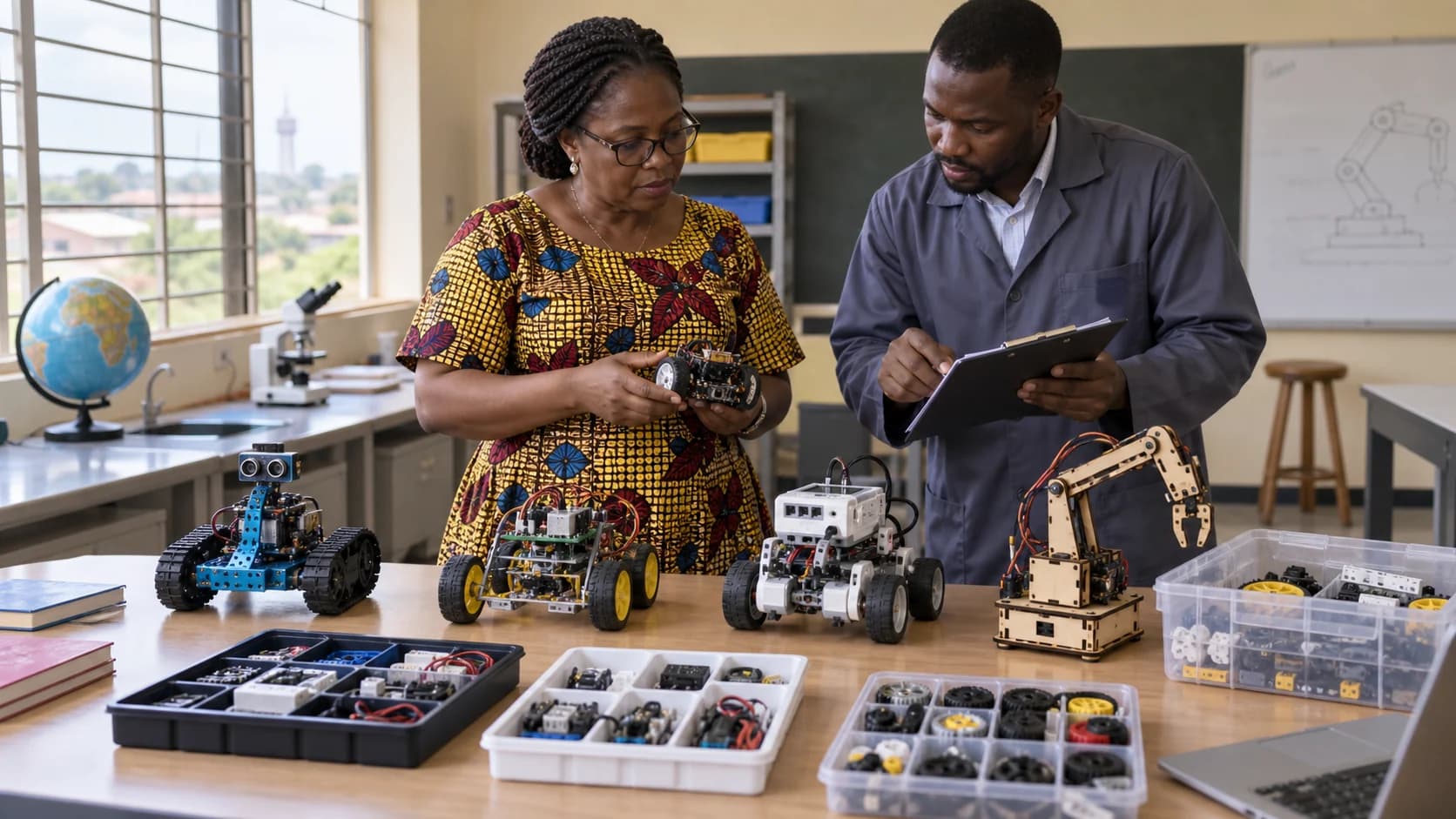
Construction robotics, electronics and microcontroller kits, mobile robots, competition systems and fabrication platforms support different outcomes and age groups.
The practical question is whether this principle is visible in plans, budgets, learning materials and day-to-day responsibilities. Institutions should ask for evidence, test assumptions on a manageable scale and document who owns the next action.
Match complexity to learner progression
Young learners need robust components and visible cause-and-effect. Older learners can handle open electronics, text coding, data and greater design freedom.
The practical question is whether this principle is visible in plans, budgets, learning materials and day-to-day responsibilities. Institutions should ask for evidence, test assumptions on a manageable scale and document who owns the next action.
What drives price
Controller capability, sensors, motors, construction quality, software, licences, warranties, spare parts, curriculum, training, shipping and support determine total cost.
The practical question is whether this principle is visible in plans, budgets, learning materials and day-to-day responsibilities. Institutions should ask for evidence, test assumptions on a manageable scale and document who owns the next action.
Calculate kit ratios
One kit per learner is rarely necessary. Well-designed teams of three to five can share responsibility, provided roles rotate and all learners produce evidence.
The practical question is whether this principle is visible in plans, budgets, learning materials and day-to-day responsibilities. Institutions should ask for evidence, test assumptions on a manageable scale and document who owns the next action.
Procure for the lifecycle
Pilot before bulk purchase, verify replacement availability, register inventory, train teachers and reserve funds for consumables and high-failure components.
The practical question is whether this principle is visible in plans, budgets, learning materials and day-to-day responsibilities. Institutions should ask for evidence, test assumptions on a manageable scale and document who owns the next action.
Your practical next step
Request an equipment-neutral needs assessment and kit recommendation from InovTech. A useful first conversation should clarify learners, objectives, location, timetable, current capacity, constraints and the evidence required for a decision.
InovTech can then recommend an appropriate pathway rather than forcing every institution into the same package.
- Age and learning fit
- Curriculum included
- Repair and spare-parts access
- Teacher training
- Three-year total cost
Frequently asked questions
How many robotics kits does a school need?
The answer depends on class size and pedagogy. Teams of three to five learners per kit often work well when roles and access are carefully managed.
Why are robotics-kit prices different?
Differences reflect hardware capability, durability, included sensors, software, curriculum, warranties, training, shipping and support.
Put the article into practice
- 1Age and learning fit
- 2Curriculum included
- 3Repair and spare-parts access
- 4Teacher training
- 5Three-year total cost